%20(4).png)
Coverage Confidence
The Challenge
A premium insurance brand needed to modernize a 15-year-old digital experience while continuing to serve loyal customers and attracting a new generation of prospects.
In a market where price dominated the conversation, the experience needed to build trust, communicate value beyond cost, and help people feel ready to request a quote.
In a market where price dominated the conversation, the experience needed to build trust, communicate value beyond cost, and help people feel ready to request a quote.
Role
Lead Experience Designer
timeline
6 Weeks Strategy & Discovery
18 Weeks Delivery (9 Sprints)
SCOPE
700+ Pages
Designing for Quote Readiness
I redesigned the experience around intentional pathways, creating tailored journeys for existing customers, established prospects, and emerging prospects. Regardless of where visitors entered the site or where they were in their journey, every pathway led to a meaningful next step.
By connecting educational content, product discovery, and personalization, the experience helped people understand their options, build confidence, and improve quote readiness.
By connecting educational content, product discovery, and personalization, the experience helped people understand their options, build confidence, and improve quote readiness.
THE SOLUTION
.png)
Global Bell & Drawer
One feed. All products.
Act without switching systems.
Act without switching systems.
.png)
Global Master Controls
Set it once.
Control delivery and priority platform-wide.
Control delivery and priority platform-wide.
.png)
Product-Level Controls
Flexible where needed.
Consistent where it matters.
Consistent where it matters.
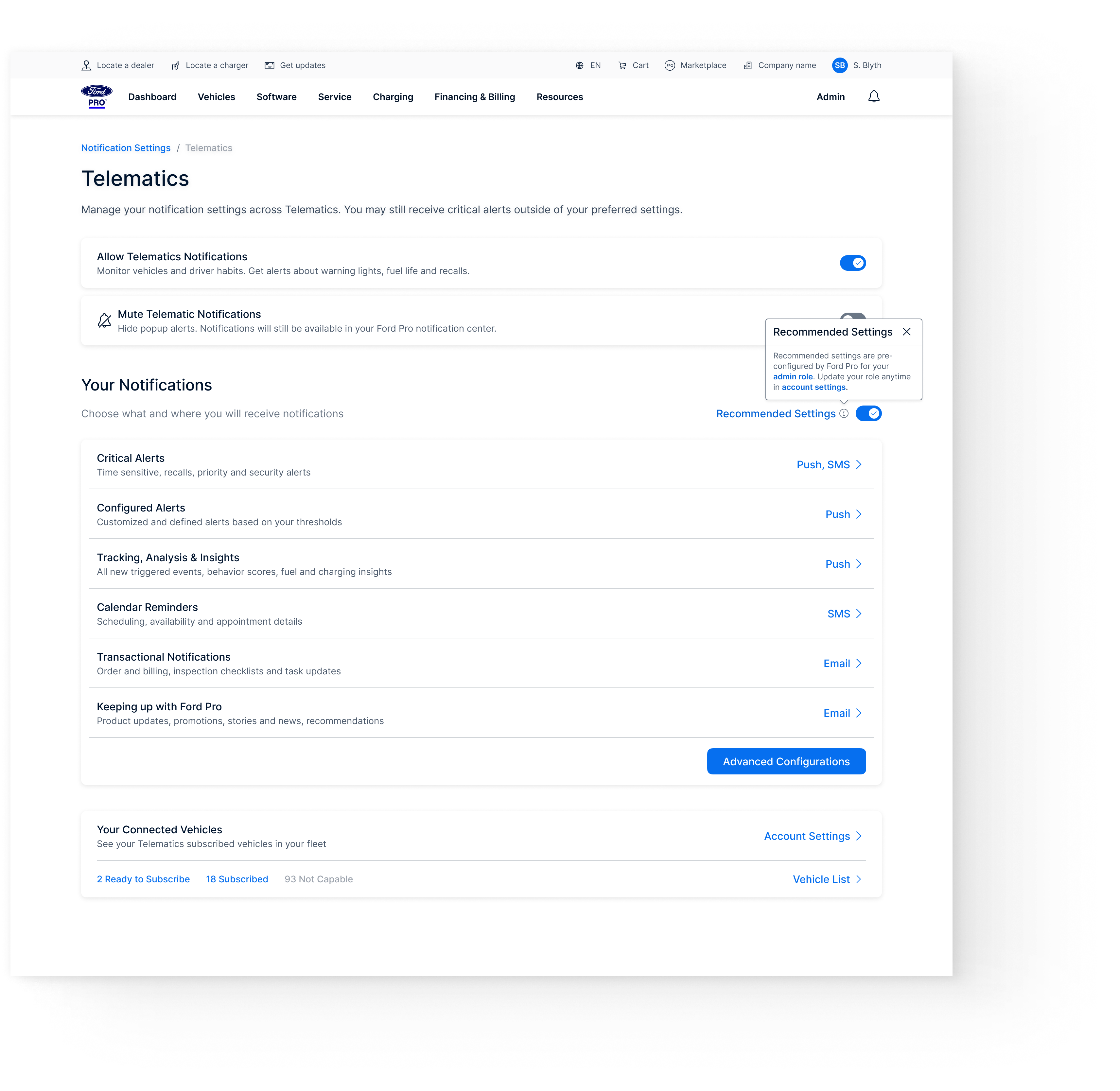
Priority and Action in Practice
See what matters.
Respond in the moment.
Respond in the moment.
.png)
Global Bell & Drawer
One feed. All products.
Review and act without leaving your workflow.
Review and act without leaving your workflow.
Global Master Controls
Set it once.
Control delivery and priority across the entire platform.
Control delivery and priority across the entire platform.
Product-Level Controls
Flexible where needed.
Consistent where it matters.
Consistent where it matters.
Priority and Action
See what matters.
Respond in the moment.
Respond in the moment.
The Approach
Designing for Action, Not Just Visibility
Centralizing alerts wasn’t enough.
They needed to be actionable in the moment. Instead of navigating across dashboards, customers could resolve issues directly from the alert itself.
They needed to be actionable in the moment. Instead of navigating across dashboards, customers could resolve issues directly from the alert itself.

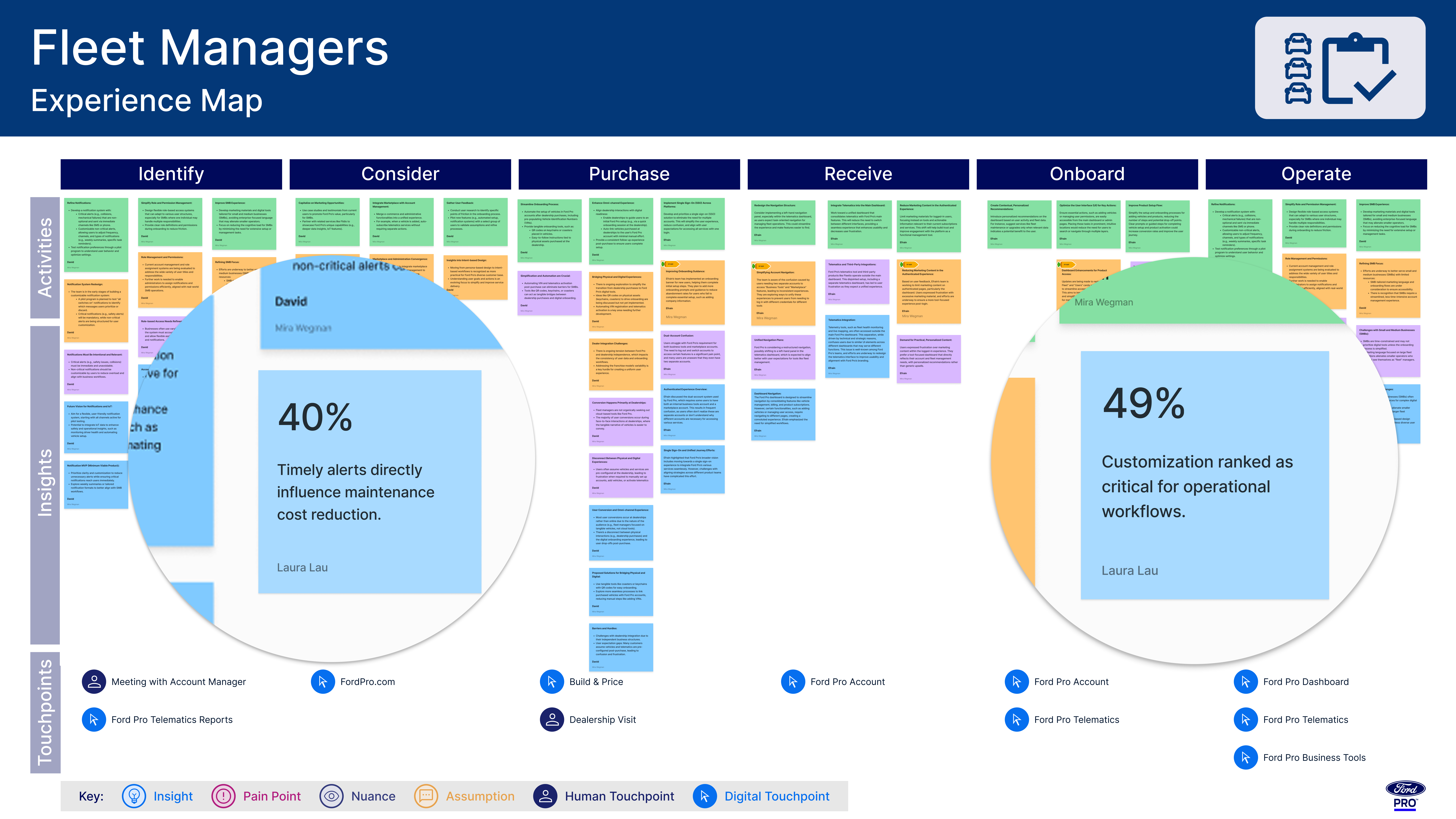
Current-State Analysis
Alerts didn't move with the user
Through interviews and journey mapping, we uncovered a simple issue: Alerts didn’t move with the user.
- Timely alerts influenced uptime
- Customization was essential
These findings shaped the need for centralized control and actionable delivery.
Key signals:
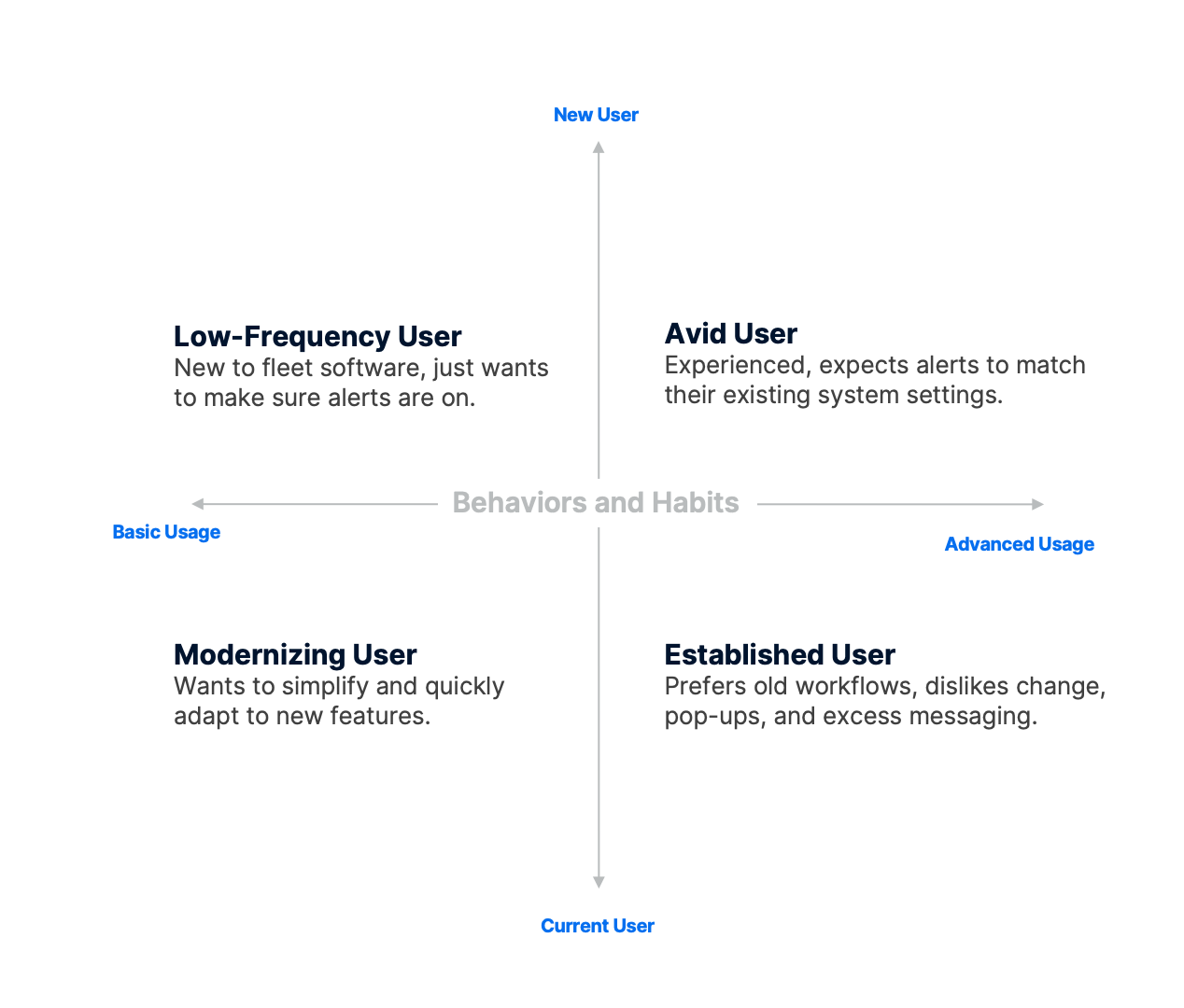
Usage Patterns
No Single Default Experience
We observed that notification preferences varied more by workflow and comfort with complexity than by role. The system needed to support both minimal and advanced control, without forcing default.
This reinforced the need for a flexible, centralized control model.
This reinforced the need for a flexible, centralized control model.
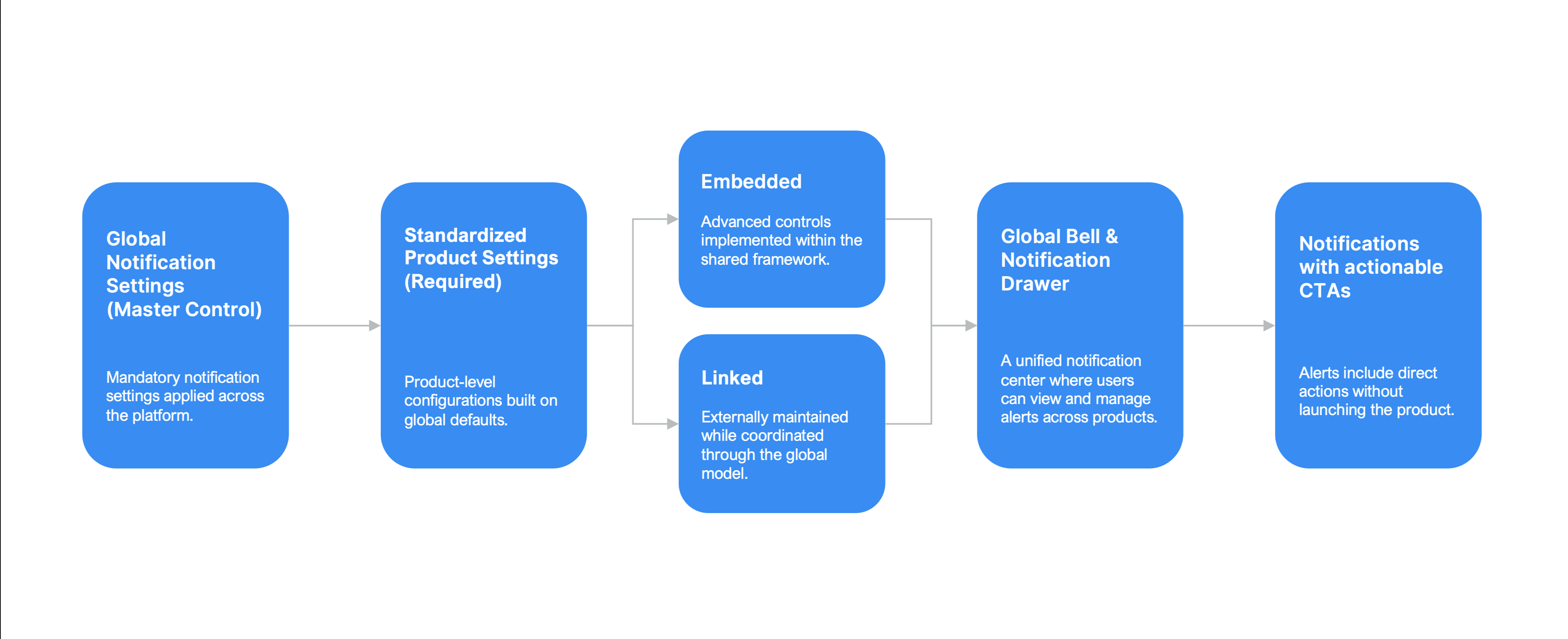
A Layered Notification Foundation
To support different customer needs while maintaining consistency across products, I designed a layered notification framework:
Global controls (required)
Standardized product settings (required)
Advanced configurations (embedded or linked)
This framework created one consistent experience while giving individual products the flexibility to support their own workflows.
Global controls (required)
Standardized product settings (required)
Advanced configurations (embedded or linked)
This framework created one consistent experience while giving individual products the flexibility to support their own workflows.
System Architecture
From One Bell to Coordinated Alerts
Originally, we proposed a single global notification center.
As the architecture evolved, one key product needed to remain outside the core platform while maintaining its own notification experience. Rather than forcing a one-size-fits-all solution, we evolved the framework to coordinate global and in-product alerts without duplication.
The result: a governed, multi-surface notification ecosystem.
As the architecture evolved, one key product needed to remain outside the core platform while maintaining its own notification experience. Rather than forcing a one-size-fits-all solution, we evolved the framework to coordinate global and in-product alerts without duplication.
The result: a governed, multi-surface notification ecosystem.
Constraints & Tradeoffs
.png)
Defining the Logic Behind Alerts
Every notification followed a shared set of rules that determined what was delivered, when it was delivered, and how customers could respond, creating predictable behavior across products while allowing each team to support its own workflows.
The rule engine governed:
• Global defaults
• Product overrides
• Channel preferences
• Alert prioritization
• Duplicate prevention
• Consistent actions
The rule engine governed:
• Global defaults
• Product overrides
• Channel preferences
• Alert prioritization
• Duplicate prevention
• Consistent actions
rule engine
.png)
One Alert, Multiple Surfaces
A single interaction model ensured alerts behaved predictably across every surface while preventing duplicate notifications.
The interaction model ensured:
• Duplicate alerts were suppressed
• Priority determined visibility
• Interaction patterns remained consistent
Users will know where alerts live, how they behave, and what happens when they act.
The interaction model ensured:
• Duplicate alerts were suppressed
• Priority determined visibility
• Interaction patterns remained consistent
Users will know where alerts live, how they behave, and what happens when they act.
Interaction Model
.png)
Bringing the Framework to Life
A shared design system translated the notification framework into reusable components and interaction patterns. Products remained technically independent while delivering one cohesive experience.
design system
.png)
One Connected Experience
A scalable notification framework that brings alerts, preferences, and actions together across products while giving teams the flexibility to evolve independently.

Back Top

© 2026 LauraLau.Design